Siúil a Rún Tin Whistle Tab And Piano Letter Notes
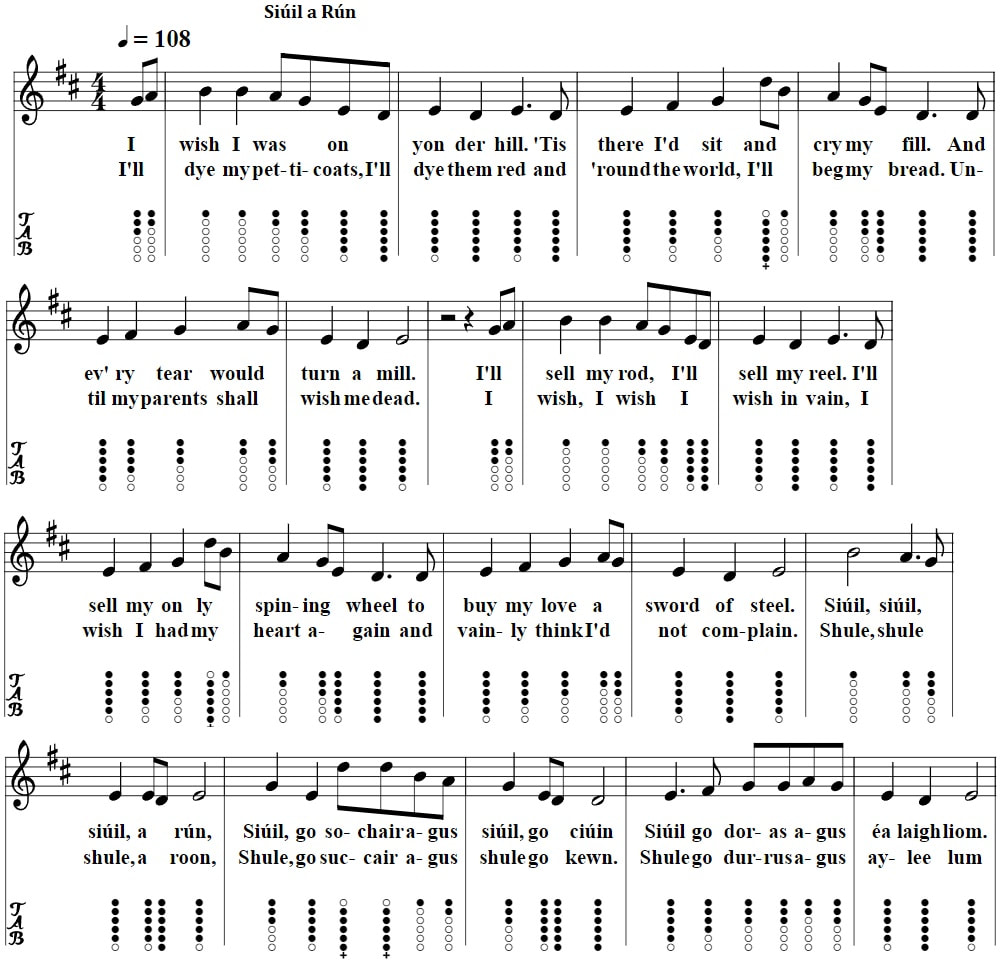
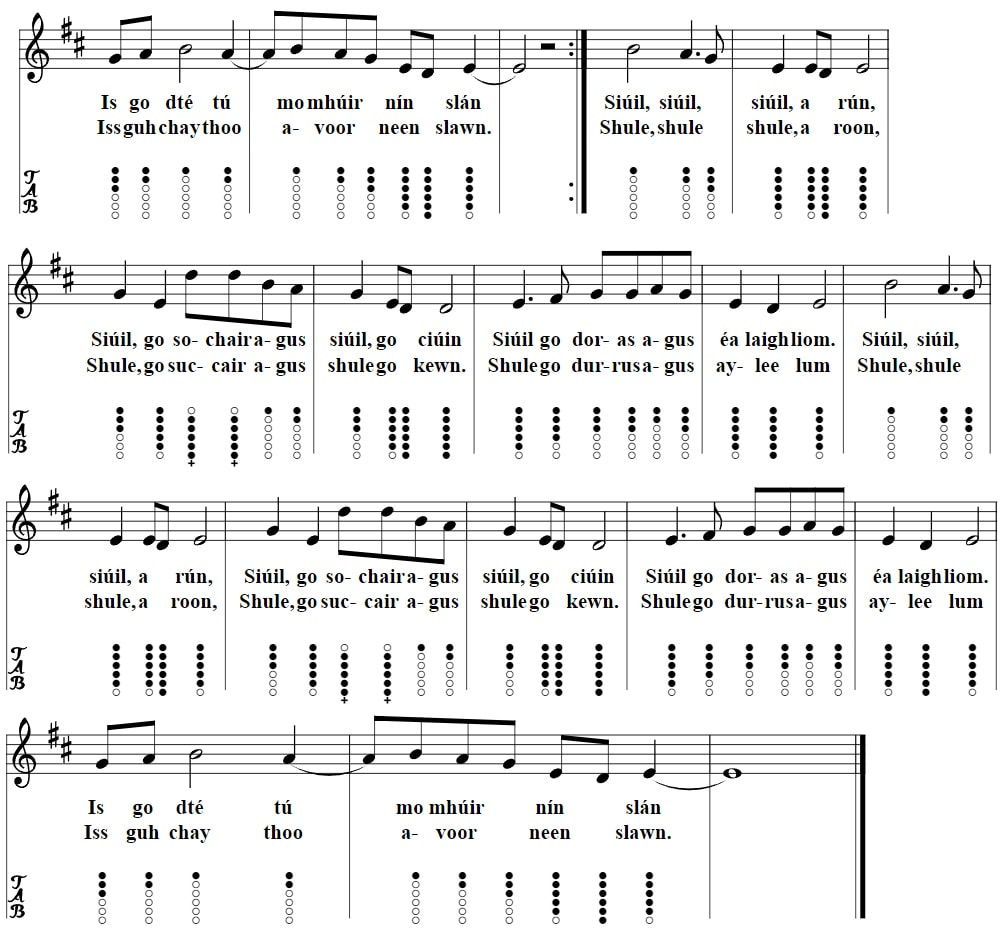
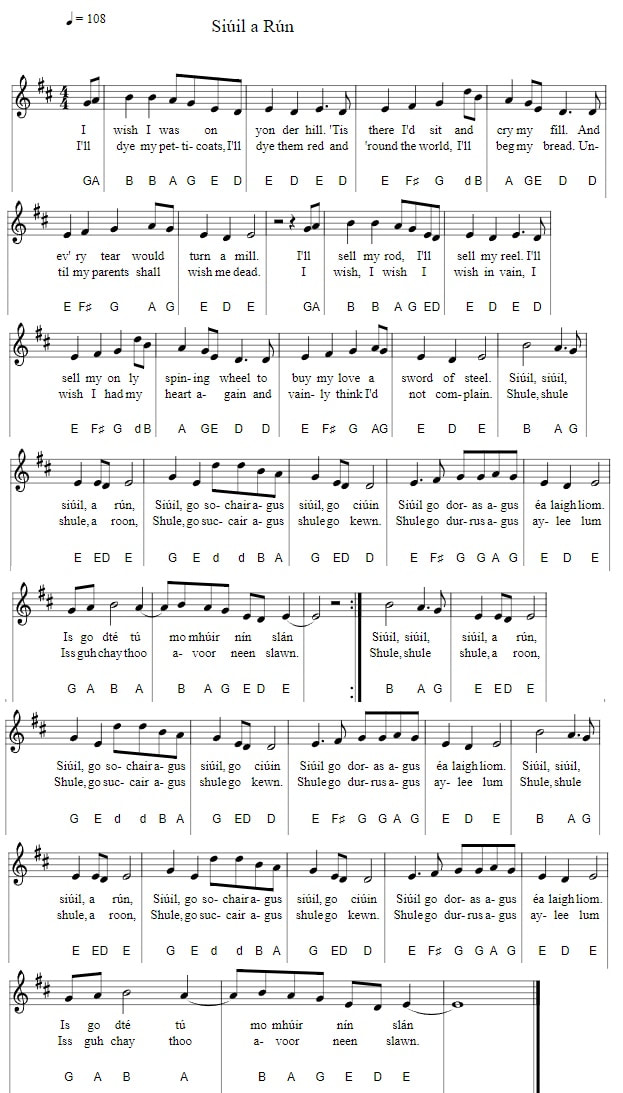
Siúil a Rún Tin Whistle Tab And Piano Keyboard Letter Notes In English And Irish, which are suitable for the flute and recorder
"Siúil a Rún" (pronounced "shool a roon") is a classic Irish folk song with a rich and complex history. It is a powerful example of a macaronic song, meaning its lyrics are a mix of two languages, in this case, Irish Gaelic and English.
Origin and History
The Meaning of the Lyrics
The song is a heartbreaking ballad of love and loss, capturing the sorrow of a woman left behind.
Notable Versions
"Siúil a Rún" has been a favorite of folk artists for decades, with many adding their own interpretation to its timeless melody.
Origin and History
- A Song of Separation: The song is a lament sung by a woman whose lover has left to become a soldier. The earliest versions are believed to have originated in the late 17th or early 18th century, during a period of intense political and military upheaval in Ireland.
- The Wild Geese: The song is often associated with the "Wild Geese," the name given to the Irish soldiers who left Ireland to serve in continental European armies, particularly in France, after the defeat of the Jacobite cause at the end of the Williamite War in Ireland in 1691.
- Linguistic Blend: The use of Irish in the chorus ("Siúil, siúil, siúil a rún / Siúil go socair agus siúil go ciúin / Siúil go doras agus éalaigh liom") is a key feature of the song. The Irish phrases, which translate to "Go, go, go, my darling / Go quietly and go gently / Go to the door and slip away with me," create a sense of intimacy and secrecy. The English verses provide the narrative, making the song accessible to a wider audience while retaining a distinctly Irish cultural flavor.
The Meaning of the Lyrics
The song is a heartbreaking ballad of love and loss, capturing the sorrow of a woman left behind.
- Love and Patriotism: The narrator of the song is a young woman whose love is leaving her to fight for a cause. She expresses her profound sorrow but also her love and support for her lover's choice, even if she cannot follow him.
- The Price of Loyalty: The lyrics reveal the depth of her sacrifice, as she says she would follow her love across the sea, even if she had to sell her fine possessions to do so. The most famous line is, "I'll sell my rock, I'll sell my reel / I'll sell my only spinning wheel / To buy my love a sword of steel," which shows her willingness to part with everything that defines her domestic, womanly life to arm her man for war.
- The "Jacobite" Interpretation: Many believe the song is a veiled reference to the Jacobite cause, which sought to restore the Catholic King James II to the thrones of England, Scotland, and Ireland. Singing a song about a loved one leaving to fight for a king "over the water" would have been a coded way to express support for a cause that was forbidden under British rule.
Notable Versions
"Siúil a Rún" has been a favorite of folk artists for decades, with many adding their own interpretation to its timeless melody.
- Clannad: The Irish group Clannad recorded a beautiful, ethereal version that features the haunting vocals of Máire Brennan. Their performance brought the song to a global audience in the 1980s.