Mo Ghrá Thú a Thiarna Sheet Music
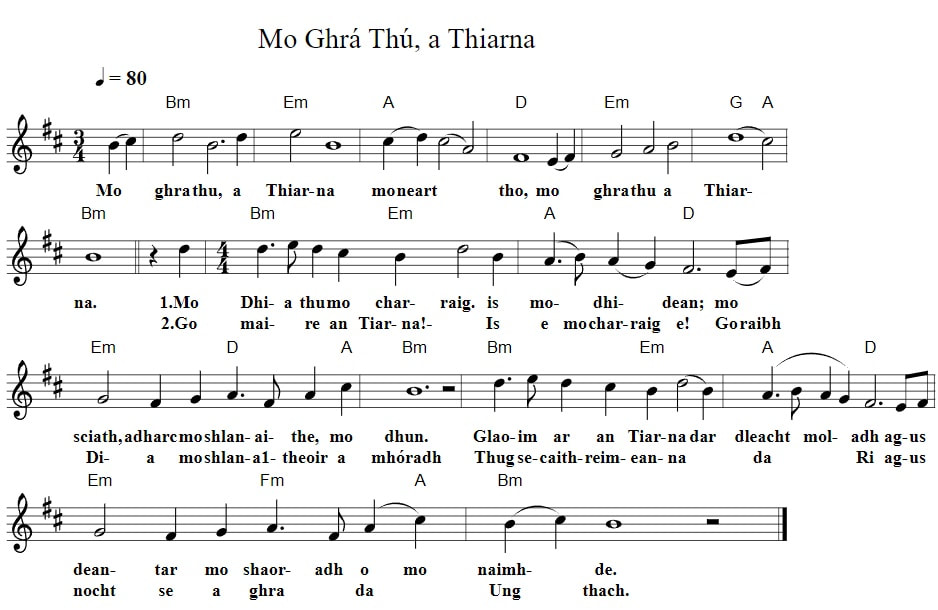
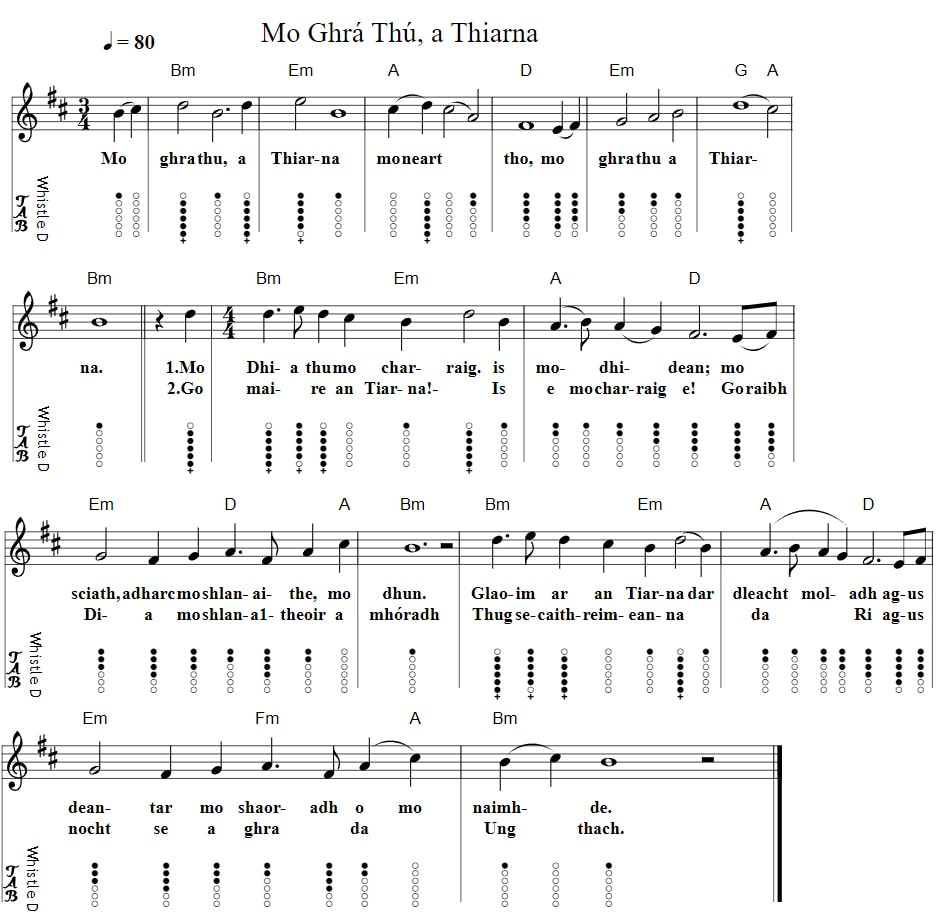
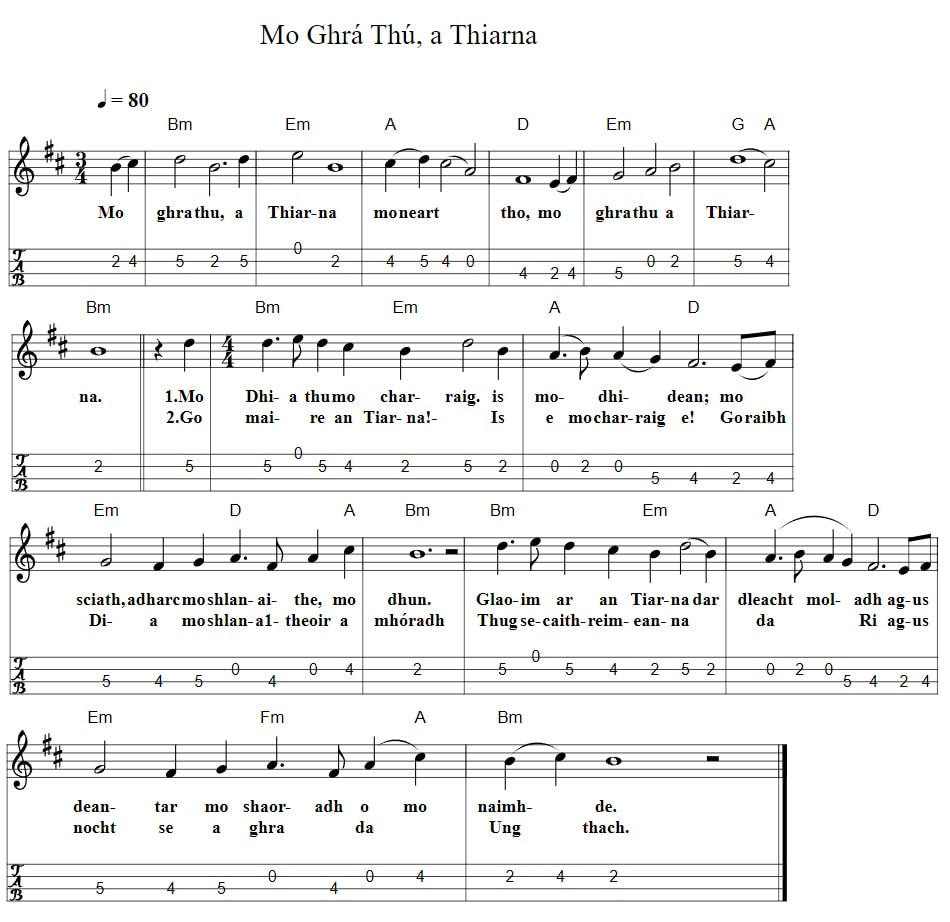
Mo Ghrá Thú a Thiarna Sheet Music with lyrics and chords. Tin whistle and mandolin tab.
Song Meaning.
"Mo Ghrá Thú, a Thiarna" (which translates to "You Are My Love, O Lord") is a traditional Irish hymn or spiritual song that expresses deep love, devotion, and reverence for God. It is sung in the Irish language (Gaeilge) and holds a sacred, meditative quality, often used in religious ceremonies or spiritual gatherings.
Meaning and Themes:
Devotion and Worship:
The song centers on expressing profound love and gratitude for God’s presence in the singer’s life. The phrase "Mo Ghrá Thú" (You are my love) captures an intimate, personal relationship with God.
Faith and Trust:
The lyrics typically convey themes of trust in divine guidance and strength through life's challenges. It reflects a sense of surrender to the Lord’s will, trusting that all will be well under divine care.
Praise and Gratitude:
The song often expresses appreciation for the beauty of creation and the blessings of life, emphasizing a close connection between faith and the natural world.
Cultural and Spiritual Significance:
Irish Heritage: The use of the Irish language in spiritual songs like this one ties closely to Ireland’s rich cultural and religious traditions.
Sacred Music: "Mo Ghrá Thú, a Thiarna" is often performed in churches, especially during times of prayer, reflection, or solemn ceremonies. It carries an air of peace and reverence, inspiring contemplation.
Song Meaning.
"Mo Ghrá Thú, a Thiarna" (which translates to "You Are My Love, O Lord") is a traditional Irish hymn or spiritual song that expresses deep love, devotion, and reverence for God. It is sung in the Irish language (Gaeilge) and holds a sacred, meditative quality, often used in religious ceremonies or spiritual gatherings.
Meaning and Themes:
Devotion and Worship:
The song centers on expressing profound love and gratitude for God’s presence in the singer’s life. The phrase "Mo Ghrá Thú" (You are my love) captures an intimate, personal relationship with God.
Faith and Trust:
The lyrics typically convey themes of trust in divine guidance and strength through life's challenges. It reflects a sense of surrender to the Lord’s will, trusting that all will be well under divine care.
Praise and Gratitude:
The song often expresses appreciation for the beauty of creation and the blessings of life, emphasizing a close connection between faith and the natural world.
Cultural and Spiritual Significance:
Irish Heritage: The use of the Irish language in spiritual songs like this one ties closely to Ireland’s rich cultural and religious traditions.
Sacred Music: "Mo Ghrá Thú, a Thiarna" is often performed in churches, especially during times of prayer, reflection, or solemn ceremonies. It carries an air of peace and reverence, inspiring contemplation.
The Tin Whistle Notes
The Mandolin Tab
"Mo Ghrá Thú a Thiarna" is a beautiful and widely used modern Irish hymn. Its title, pronounced roughly "Muh graw hoo ah HEER-nah," translates to "My Love You Are, O Lord" or "My Love is You, O Lord." It's a deeply spiritual and personal song that is a popular choice for weddings, funerals, and other liturgical services in Ireland.
Lyrical and Biblical Basis
The song's lyrics are a direct adaptation of verses from Psalm 18 (in some biblical traditions, Psalm 17). The Psalm is a hymn of praise and thanksgiving to God, where David expresses his love and gratitude for God as his strength, deliverer, and refuge.
The main lyrics in Irish, often forming the refrain, are:
Mo Ghrá Thú, a Thiarna, mo neart Thú. (My love you are, O Lord, my strength you are.)
Mo Ghrá Thú, a Thiarna. (My love you are, O Lord.)
Mo Dhia Thú, mo charraig is mo dhídean. (My God you are, my rock and my refuge.)
Mo sciath, adharc mo shlánaithe, mo dhún. (My shield, my saving horn, my fortress.)
The use of these powerful biblical metaphors—rock, shield, fortress, refuge—shows a deep reliance on God and a trust in his protection. The song is a declaration of complete faith and devotion.
Musical Style and Popularity
"Mo Ghrá Thú a Thiarna" is often performed in a quiet, contemplative, and melodic style. It has a haunting and serene quality that makes it well-suited for a reflective atmosphere. While it is a relatively modern composition, it has quickly been adopted into the traditional Irish liturgical and folk music canon.
The song is strongly associated with the composer and priest Liam Lawton. He is a well-known Irish musician who has written many popular hymns and religious songs that blend traditional Irish musical styles with contemporary spiritual themes. Lawton's version of the song, often titled "The Hiding Place," uses the same melody but includes some English lyrics.
Cultural Significance
Liturgical Use: The hymn is frequently used in Roman Catholic services in Ireland. It is a very common choice for the Responsorial Psalm at wedding and funeral Masses, as its message of unconditional love and eternal faith resonates with both solemn and joyous occasions.
Irish Language: The song's popularity has also helped to introduce the Irish language to a wider audience, particularly in a religious context. For many, it's one of the few hymns they will hear and sing in the native language, connecting them to a deeper part of their cultural and spiritual heritage.
Widespread Performance: Numerous Irish singers and choirs have performed and recorded the song, including Aoife Ní Fhearraigh, Órla Fallon, and various wedding singers and church choirs across the country.
In summary, "Mo Ghrá Thú a Thiarna" is a powerful and beloved modern hymn that beautifully merges ancient biblical text with the melodic sensibilities of modern Irish music. It stands as a testament to faith, a declaration of love for God, and a poignant expression of cultural identity.
"Mo Ghrá Thú a Thiarna" is a beautiful and widely used modern Irish hymn. Its title, pronounced roughly "Muh graw hoo ah HEER-nah," translates to "My Love You Are, O Lord" or "My Love is You, O Lord." It's a deeply spiritual and personal song that is a popular choice for weddings, funerals, and other liturgical services in Ireland.
Lyrical and Biblical Basis
The song's lyrics are a direct adaptation of verses from Psalm 18 (in some biblical traditions, Psalm 17). The Psalm is a hymn of praise and thanksgiving to God, where David expresses his love and gratitude for God as his strength, deliverer, and refuge.
The main lyrics in Irish, often forming the refrain, are:
Mo Ghrá Thú, a Thiarna, mo neart Thú. (My love you are, O Lord, my strength you are.)
Mo Ghrá Thú, a Thiarna. (My love you are, O Lord.)
Mo Dhia Thú, mo charraig is mo dhídean. (My God you are, my rock and my refuge.)
Mo sciath, adharc mo shlánaithe, mo dhún. (My shield, my saving horn, my fortress.)
The use of these powerful biblical metaphors—rock, shield, fortress, refuge—shows a deep reliance on God and a trust in his protection. The song is a declaration of complete faith and devotion.
Musical Style and Popularity
"Mo Ghrá Thú a Thiarna" is often performed in a quiet, contemplative, and melodic style. It has a haunting and serene quality that makes it well-suited for a reflective atmosphere. While it is a relatively modern composition, it has quickly been adopted into the traditional Irish liturgical and folk music canon.
The song is strongly associated with the composer and priest Liam Lawton. He is a well-known Irish musician who has written many popular hymns and religious songs that blend traditional Irish musical styles with contemporary spiritual themes. Lawton's version of the song, often titled "The Hiding Place," uses the same melody but includes some English lyrics.
Cultural Significance
Liturgical Use: The hymn is frequently used in Roman Catholic services in Ireland. It is a very common choice for the Responsorial Psalm at wedding and funeral Masses, as its message of unconditional love and eternal faith resonates with both solemn and joyous occasions.
Irish Language: The song's popularity has also helped to introduce the Irish language to a wider audience, particularly in a religious context. For many, it's one of the few hymns they will hear and sing in the native language, connecting them to a deeper part of their cultural and spiritual heritage.
Widespread Performance: Numerous Irish singers and choirs have performed and recorded the song, including Aoife Ní Fhearraigh, Órla Fallon, and various wedding singers and church choirs across the country.
In summary, "Mo Ghrá Thú a Thiarna" is a powerful and beloved modern hymn that beautifully merges ancient biblical text with the melodic sensibilities of modern Irish music. It stands as a testament to faith, a declaration of love for God, and a poignant expression of cultural identity.