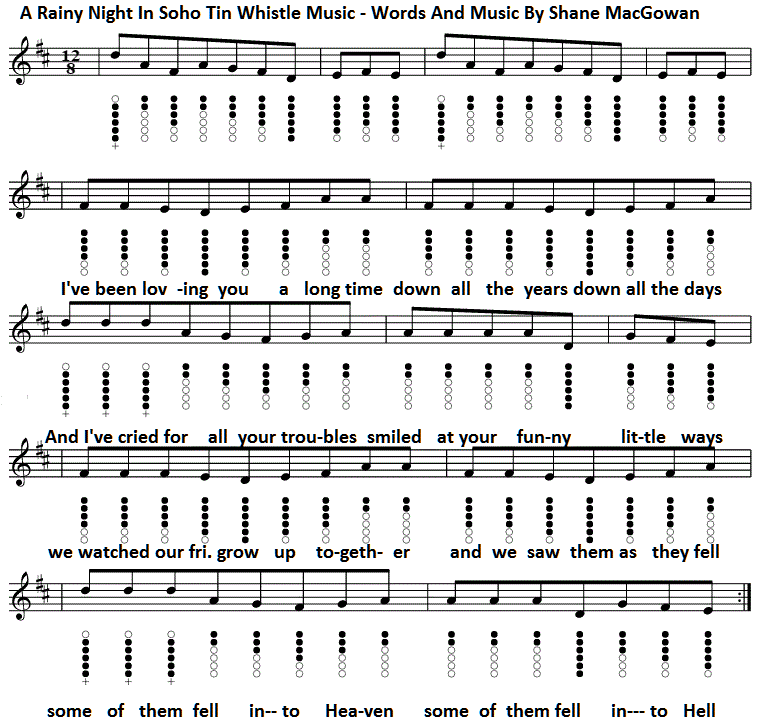
A Rainy Night In Soho Tin Whistle And Piano Keyboard notes
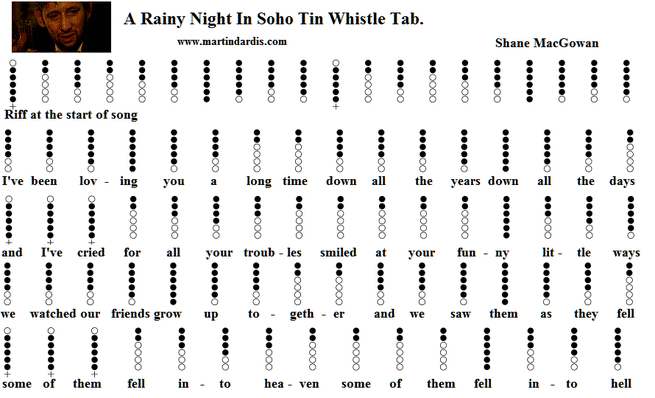
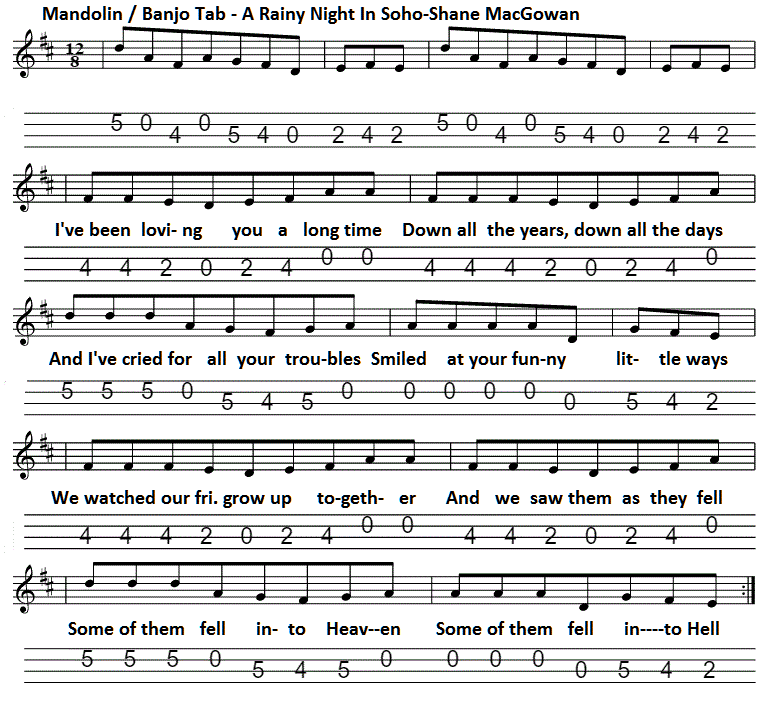
The mandolin / banjo sheet music tab is included. The sheet music time signature is 12/8 .Written by Shane MacGowan and recorded by The Pogues. These are the basic lead notes, the first part of the video just gives the lead and the second part gives the bass run. Where I marked the Ch means that that is a high C as there are lower ones also. The pogues also play this song in the key of C Major. The whistle tab is in the key of D with the first line being that little riff at the start of the song. Piano letter notes included for right hand. A Rainy Night In Soho lyrics and chords is also on the site.The PoguestrA also play this tune in the key of C Major, the same as The Pogues. Harmonics sheet music tab in C included. The link below is for the 5 string banjo tab in open G tuning.
Ebook Of The Pogues Tin Whistle Sheet Music Tabs. Price €7.40
Below is the list of tabs included in the ebook.
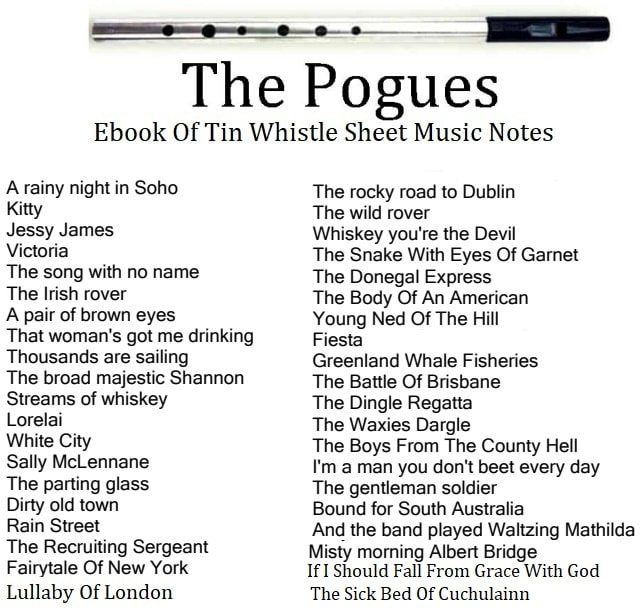
Ebook of tin whistle tabs for The Pogues
All the verses are in the pdf ebook - updates section
Below is the list of sheet music and tin whistle songs that are in my ebooks. This is the largest collection of tin whistle songs ever put together.[over 800 songs ] Including folk, pop and trad tunes plus German And French songs along with Christmas Carols.
All of the sheet music tabs have been made as easy to play as was possible. There's many Pogues songs included.
The price of the ebooks is €7.50
All of the sheet music tabs have been made as easy to play as was possible. There's many Pogues songs included.
The price of the ebooks is €7.50
A Rainy Night In Soho Beginner Piano Notes In C
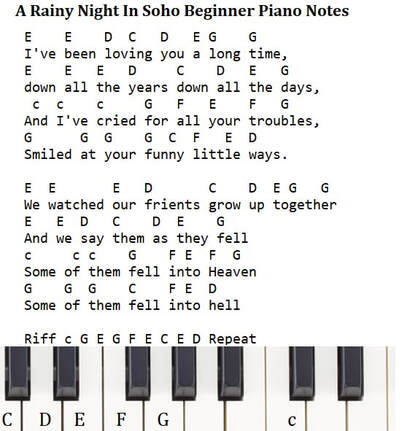
A Rainy Night In Soho Mandolin Sheet Music Tab-Key Of D Major
Drunk Pogues Fan Playing The Tin Whistle
The youtube video above uses the same notes that are here. Here's the letter notes for those who don't read the tabs. The lower case letters are the high notes. Don't forget about the intro. as it really adds a lot to the tune. If
playing a recorder use these notes.
dAFAGFDEFEdAFAGFDEFE
FFEDEFAAFFFEDEFA
dddAGFGAAAAADGFE
FFFEDEFAAFFEDEFA
dddAGFGAAAADGFE

playing a recorder use these notes.
dAFAGFDEFEdAFAGFDEFE
FFEDEFAAFFFEDEFA
dddAGFGAAAAADGFE
FFFEDEFAAFFEDEFA
dddAGFGAAAADGFE
The Harmonica Tab
Here's the harmonica tab in the key of C major, the same key The Pogues play the song in.
More Irish song tabs for Harmonica are here .
"A Rainy Night in Soho" is a classic song by the legendary Anglo-Irish band The Pogues. It stands out in their catalog as a poignant, romantic ballad, a departure from their more raucous, punk-infused traditional folk style. The song is a powerful testament to the songwriting talent of Shane MacGowan, the band's frontman.
Authorship and Release
Written by: Shane MacGowan.
Album: The song was released on the 1986 EP "Poguetry in Motion" and later appeared on the 1991 compilation album, "The Best of the Pogues."
Lyrical Meaning and Themes
"A Rainy Night in Soho" is a beautifully melancholic and deeply personal song that explores themes of love, memory, redemption, and the bittersweet nature of MacGowan's own tumultuous life. The lyrics are poetic, rich with imagery, and full of his characteristic lyrical genius.
A Love Song to a Place: The song is a love song, but it's not just for a person; it's also a love song to a place—Soho, a vibrant and sometimes seedy district in London. MacGowan often wrote about London as a kind of Irish-immigrant experience, and this song captures the atmosphere of the city on a wet, nostalgic night.
The "Lonesome" and the "Fever": The song opens with a feeling of being a "lonesome stranger," a common theme in MacGowan's work. The "fever" he mentions is a complex symbol, representing the wild, self-destructive side of his life. He contrasts this fever with a moment of peace and clarity that comes from the thought of his beloved.
Redemption Through Love: A central theme is the idea that love can be a redemptive force. The narrator finds a sense of "grace" and "redemption" in the presence of his lover. Her love is a "golden hand" that helps him "find the road I've traveled, and find the road to go." The song suggests that his love for her is a guiding light that can pull him out of the darkness of his past.
A Vow of Unwavering Love: The chorus is a simple, powerful vow of undying love and loyalty, even in the face of his own faults. The line "You'll be my baby, my baby, my baby / My one and only, my love and my lady" is a deeply personal and heartfelt declaration.
Memory and the Past: The song is filled with references to memory and the past. He mentions "dreams of all the heroes" he has known, and he looks back on his "days of drink and song." The song suggests that even though he is looking forward to the future, the ghosts of his past are always with him, but that love can help him make peace with them.
Musical Style and Legacy
Melancholic Melody: The song's melody is slow, mournful, and incredibly beautiful. It is driven by the piano and tin whistle, which give it a much more traditional Irish folk feel than some of the band's other punk-infused tracks.
Emotional Depth: "A Rainy Night in Soho" is widely regarded as one of MacGowan's best songs and a masterpiece of 20th-century songwriting. It showcases his remarkable ability to blend poetic, literary lyrics with the raw emotion of a folk ballad.
Cult Classic: While not one of The Pogues' biggest commercial hits (like "Fairytale of New York"), it has become a cult classic and a fan favorite. It is a song that is often cited as a perfect example of the band's unique blend of joy, sorrow, and raw human emotion. It is a timeless lament for a life lived hard, and a celebration of the love that makes it all worthwhile.
Authorship and Release
Written by: Shane MacGowan.
Album: The song was released on the 1986 EP "Poguetry in Motion" and later appeared on the 1991 compilation album, "The Best of the Pogues."
Lyrical Meaning and Themes
"A Rainy Night in Soho" is a beautifully melancholic and deeply personal song that explores themes of love, memory, redemption, and the bittersweet nature of MacGowan's own tumultuous life. The lyrics are poetic, rich with imagery, and full of his characteristic lyrical genius.
A Love Song to a Place: The song is a love song, but it's not just for a person; it's also a love song to a place—Soho, a vibrant and sometimes seedy district in London. MacGowan often wrote about London as a kind of Irish-immigrant experience, and this song captures the atmosphere of the city on a wet, nostalgic night.
The "Lonesome" and the "Fever": The song opens with a feeling of being a "lonesome stranger," a common theme in MacGowan's work. The "fever" he mentions is a complex symbol, representing the wild, self-destructive side of his life. He contrasts this fever with a moment of peace and clarity that comes from the thought of his beloved.
Redemption Through Love: A central theme is the idea that love can be a redemptive force. The narrator finds a sense of "grace" and "redemption" in the presence of his lover. Her love is a "golden hand" that helps him "find the road I've traveled, and find the road to go." The song suggests that his love for her is a guiding light that can pull him out of the darkness of his past.
A Vow of Unwavering Love: The chorus is a simple, powerful vow of undying love and loyalty, even in the face of his own faults. The line "You'll be my baby, my baby, my baby / My one and only, my love and my lady" is a deeply personal and heartfelt declaration.
Memory and the Past: The song is filled with references to memory and the past. He mentions "dreams of all the heroes" he has known, and he looks back on his "days of drink and song." The song suggests that even though he is looking forward to the future, the ghosts of his past are always with him, but that love can help him make peace with them.
Musical Style and Legacy
Melancholic Melody: The song's melody is slow, mournful, and incredibly beautiful. It is driven by the piano and tin whistle, which give it a much more traditional Irish folk feel than some of the band's other punk-infused tracks.
Emotional Depth: "A Rainy Night in Soho" is widely regarded as one of MacGowan's best songs and a masterpiece of 20th-century songwriting. It showcases his remarkable ability to blend poetic, literary lyrics with the raw emotion of a folk ballad.
Cult Classic: While not one of The Pogues' biggest commercial hits (like "Fairytale of New York"), it has become a cult classic and a fan favorite. It is a song that is often cited as a perfect example of the band's unique blend of joy, sorrow, and raw human emotion. It is a timeless lament for a life lived hard, and a celebration of the love that makes it all worthwhile.